
Frivolous Credit Dispute? Here’s What It Means and What to Do Next
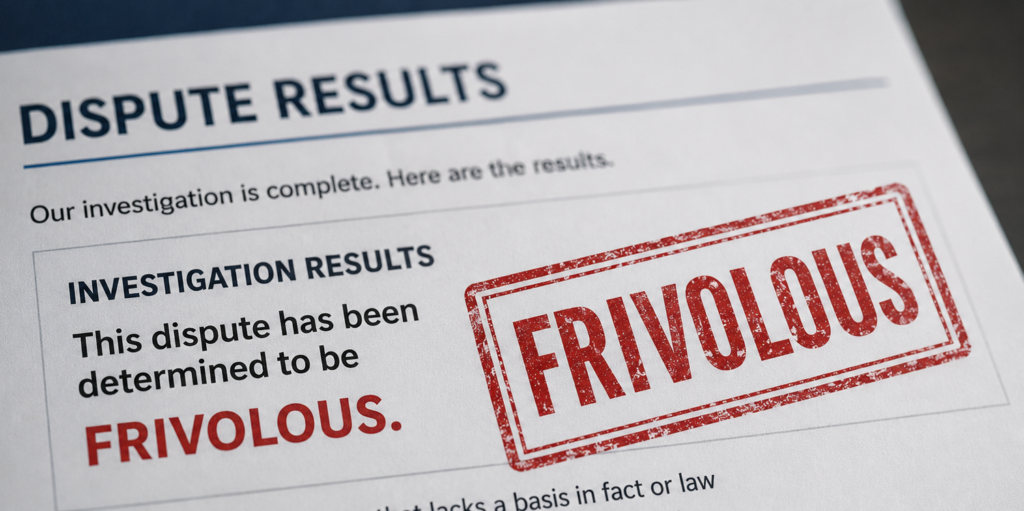
Discovering an error on your credit report and taking the time to dispute it is frustrating enough. If the credit bureau labeled your claim as a frivolous credit dispute, you may be wondering why—and whether you still have options. Seeing your credit dispute denied without a full review may leave you wondering what happened. The good news is that a frivolous finding does not automatically mean the information on your credit report is accurate or that you have run out of options.
What Does Frivolous Mean on a Credit Dispute?
Many people ask, what does frivolous mean on a credit dispute?
According to FCRA § 611 (15 U.S.C. § 1681i), a credit bureau may determine that a dispute is frivolous and does not require an investigation. This usually happens because the bureau believes it does not have enough information to investigate or because the dispute is substantially the same as one that has already been reviewed.
In other words, the bureau is saying it cannot move forward with the dispute as it was submitted. It is not necessarily saying that the information on your credit report is correct.
If a credit bureau determines your dispute is frivolous, it is generally required to notify you, no later than 5 business days after making the determination, and explain why the investigation was not conducted.
The letter will often explain:
- Why the dispute was not investigated
- What information may be missing
- Whether additional documentation is needed
- How you may submit a new dispute
Read the letter carefully before filing another dispute. It may provide valuable guidance on what should be included next time.
Why Was My Credit Dispute Marked Frivolous?
Even with the notice from the credit bureau, many don’t fully understand. You may still be wondering, why was my credit dispute marked frivolous?
There are several reasons this can happen.
You Didn’t Include Enough Information
A dispute should clearly explain what information is incorrect and why.
For example, instead of writing:
“This account is wrong.”
It is much more helpful to explain:
“This account shows a 90-day late payment for May 2025, but my records show the payment was made on time.”
Supporting documents can also strengthen your dispute.
You Submitted the Same Dispute Again
One of the most common reasons for frivolous disputes is submitting the same dispute multiple times without adding any new information.
If the credit bureau has already investigated the issue and your new dispute does not provide additional evidence, it may decide another investigation is unnecessary.
The Dispute Was Too General
A vague dispute can make it difficult for the credit bureau to understand exactly what should be investigated.
Be specific about:
- The account involved
- The information that is incorrect
- Why it is inaccurate
- The correction you are requesting
Does a Frivolous Credit Dispute Mean You Lost?
No.
A frivolous credit bureau dispute is different from a dispute that was investigated and found to be accurate.
Instead, it means the credit bureau decided not to investigate based on the information it received.
In many situations, consumers are able to submit another dispute with additional documentation or a clearer explanation.
If you need guidance on preparing a stronger dispute, visit our Disputing Credit Report Errors page for step-by-step instructions and tips for writing an effective dispute letter.
What Should You Do Next?
If your credit dispute was denied because it was considered frivolous, you still have options.
Consider these next steps:
- Review the bureau’s explanation carefully.
- Gather any missing information that supports your position.
When Should You Contact a Consumer Protection Attorney?
Sometimes a dispute is marked frivolous even when you have provided detailed information and supporting evidence.
If that happens, or if inaccurate information continues to appear on your credit report despite multiple attempts to correct it, you may have legal rights under the Fair Credit Reporting Act.
An experienced consumer protection attorney can review your situation, determine whether the credit bureau followed the law, and help you pursue the correction of inaccurate information.
Get Help With Credit Report Errors
If your frivolous credit dispute has left you feeling stuck, you do not have to handle the process alone.
Vullings Law Group helps consumers challenge inaccurate credit reporting and protect their rights under the Fair Credit Reporting Act. Whether you’ve received a frivolous dispute letter, had a credit dispute denied, or believe a credit bureau failed to properly investigate your claim, we’re here to help.
Contact us today for a consultation and learn how we may be able to help you correct credit report errors and hold credit reporting agencies accountable.